
Recent Posts



Glaucoma Awareness Month
Blog by Ivan J. Srut, O.D.
Chief of Optometry for St. Hope Foundation
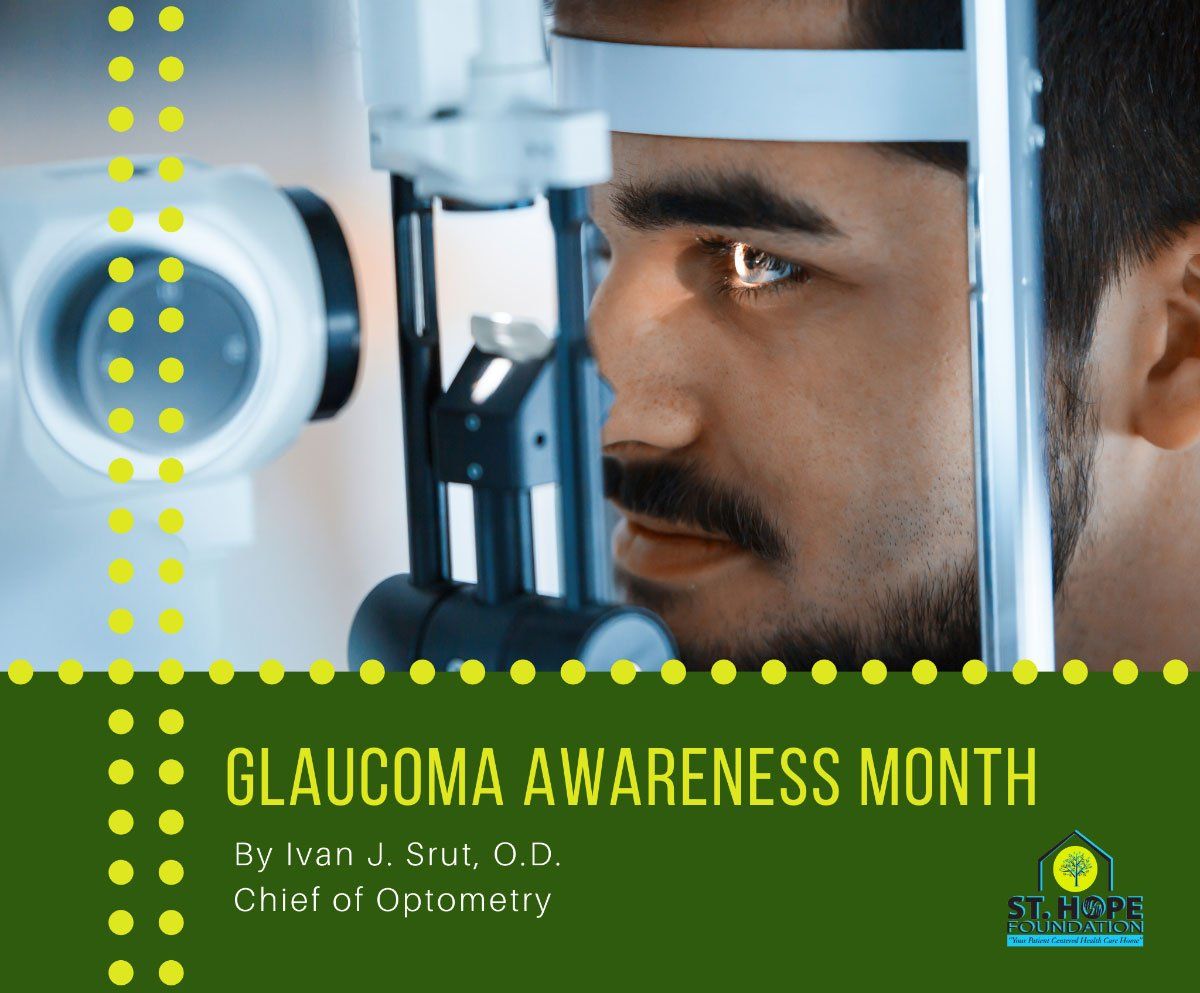
January is glaucoma awareness month, and since glaucoma is the 2nd leading cause of blindness in the world (according to the World Health Organization) I thought it would be a good idea to do a quick refresher on it.
Glaucoma is a group of eye diseases that causes gradual vision loss, often without warning. It can affect people of all ages, but the most common forms generally affect the middle-aged and elderly populations. The loss of vision is due to damage to the optic nerve, which carries images from the eye to the brain.
In their basic forms there are two main types of glaucoma. These are Primary Open Angle Glaucoma and Angle Closure Glaucoma. The optic nerve damage is generally caused by increased intraocular pressure, or pressure inside the eye. Normal tension glaucoma is when there is optic nerve damage despite normal intraocular pressure. There is also secondary glaucoma, which refers to glaucoma that is caused by secondary causes or diseases that cause increased eye pressure, optic nerve damage, and vision loss.
Unfortunately, glaucoma is also the leading cause of irreversible blindness, so regular eye exams are very important, especially if you have any risk factors. These would include people of African, Hispanic or Asian descent, people over the age of 60, diabetics, very near-sighted people, and people that have a family history of glaucoma.
Since vision loss is typically very gradual, a person may not notice any loss until it is significant! Central vision may still be excellent, but peripheral vision is generally the first to go. Don’t take any chances, get your eyes checked at least once a year!
Until next time…