
Recent Posts




Digital Eye Strain
By: Sabrina Charrier, OD, FAAO
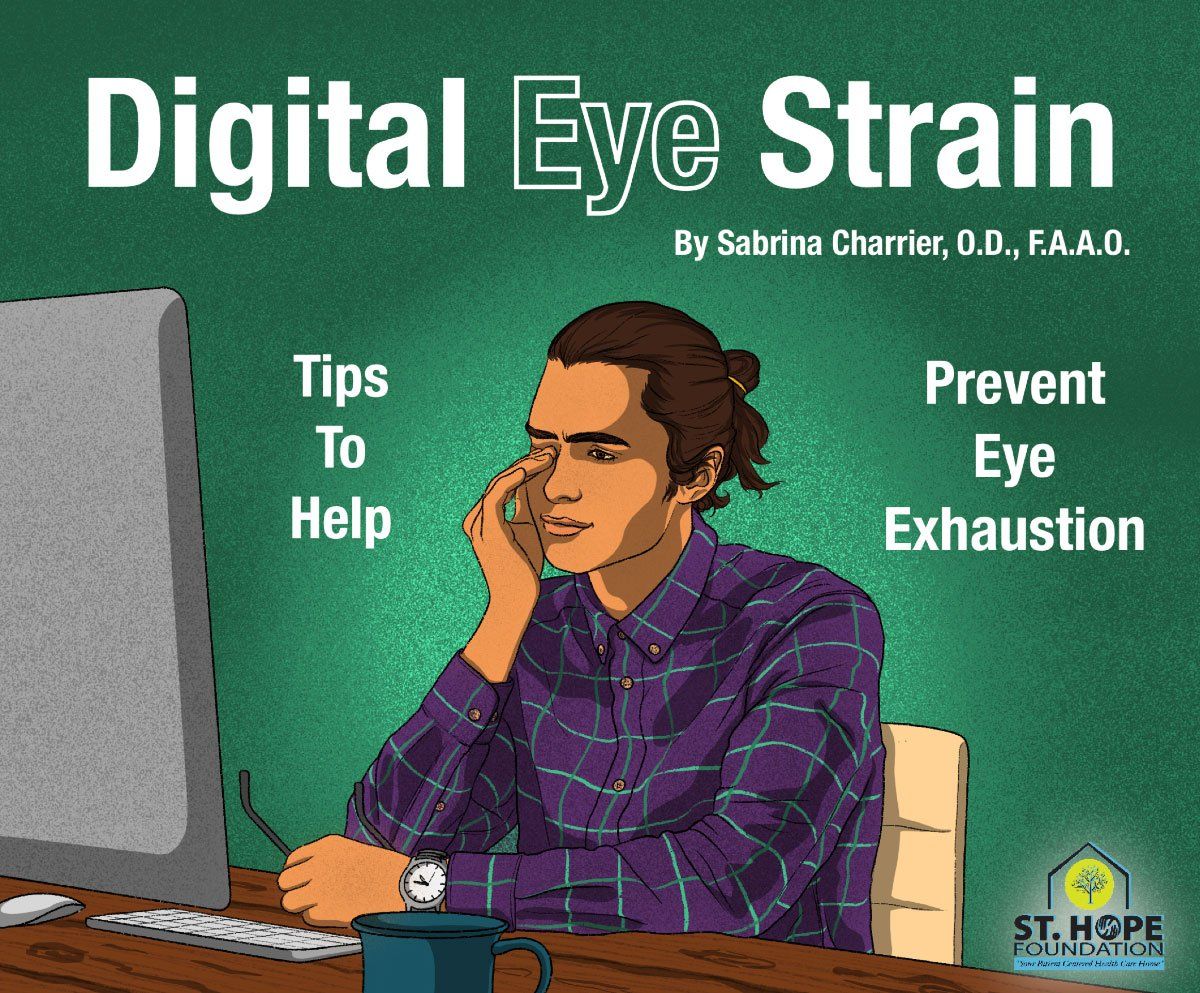
With this pandemic, many people have a new normal of working from home. This has brought on more hours of sitting in front of computers, laptops, and phones. Personally, I’m still lucky enough to be in the office every day as your local friendly eye doctor but I’ve been on more video phone calls in the past few months than I have ever been in my entire life. Add on top of that online homeschooling for kids, virtual happy hours, and video phone calls with my friends and family, and my screen time has exponentially increased. I know I’m not alone. I also know this has affected many eyes. Common symptoms include eye strain, headache, blurred vision, dry eyes, and neck and shoulder pain. Need a little relief? Try the five suggestions below to help with those extended hours in front of devices.
- Proper monitor position-When possible, keep your computer arms length away and monitor at or below eye level or even raise your chair if lowering the monitor is not possible. This will encourage better posture and proper viewing distance. For those in a bifocal or progressive lens, the reading portion is set towards the bottom of the lens so you can look slightly down towards your work. It is also set for a specific distance, usually distance and reading. Consider a computer bifocal that is made specifically for your computer and desktop distances.
- Lighting– Adjust screen brightness and contrast to the room light level. Also limit glare from windows and overhead fluorescent lighting. If there is no way to minimize glare then consider an anti-glare screen to filter the amount of light reflected. Anti-reflective coatings on glasses can also help decrease the amount of reflective light getting to your eyes.
- Rest breaks– Give your eyes a break with the 20/20/20 rule. Every 20 minutes, take a 20 second break, and look across the room and something 20 feet away. This will give your eyes a much appreciated chance to relax and refresh.
- Blinking-The normal blink rate is 15-20 times per minute, but when we concentrate on something such as reading, looking at our phones, or looking at our computers, we blink less frequently and often incompletely. To minimize the chance of developing dry eye and blurred vision, make an effort to blink more often. When taking your 20 second break, blink your eyes about 20 times and at least a few of those can be hard blinks to assure complete closure. Lubricating artificial tears can also be used but avoid astringent drops and redness relievers.
Come see your friendly neighborhood optometrists at St. Hope Foundation for your regular eye examinations or for any questions or concerns. Even a small uncorrected prescription or more advanced case of dry eye can cause many issues. We will give you recommendations for your particular situation and can discuss the best treatment plans for your eyes.