Recent Posts


Fireworks Eye Safety and Cataract Awareness Month
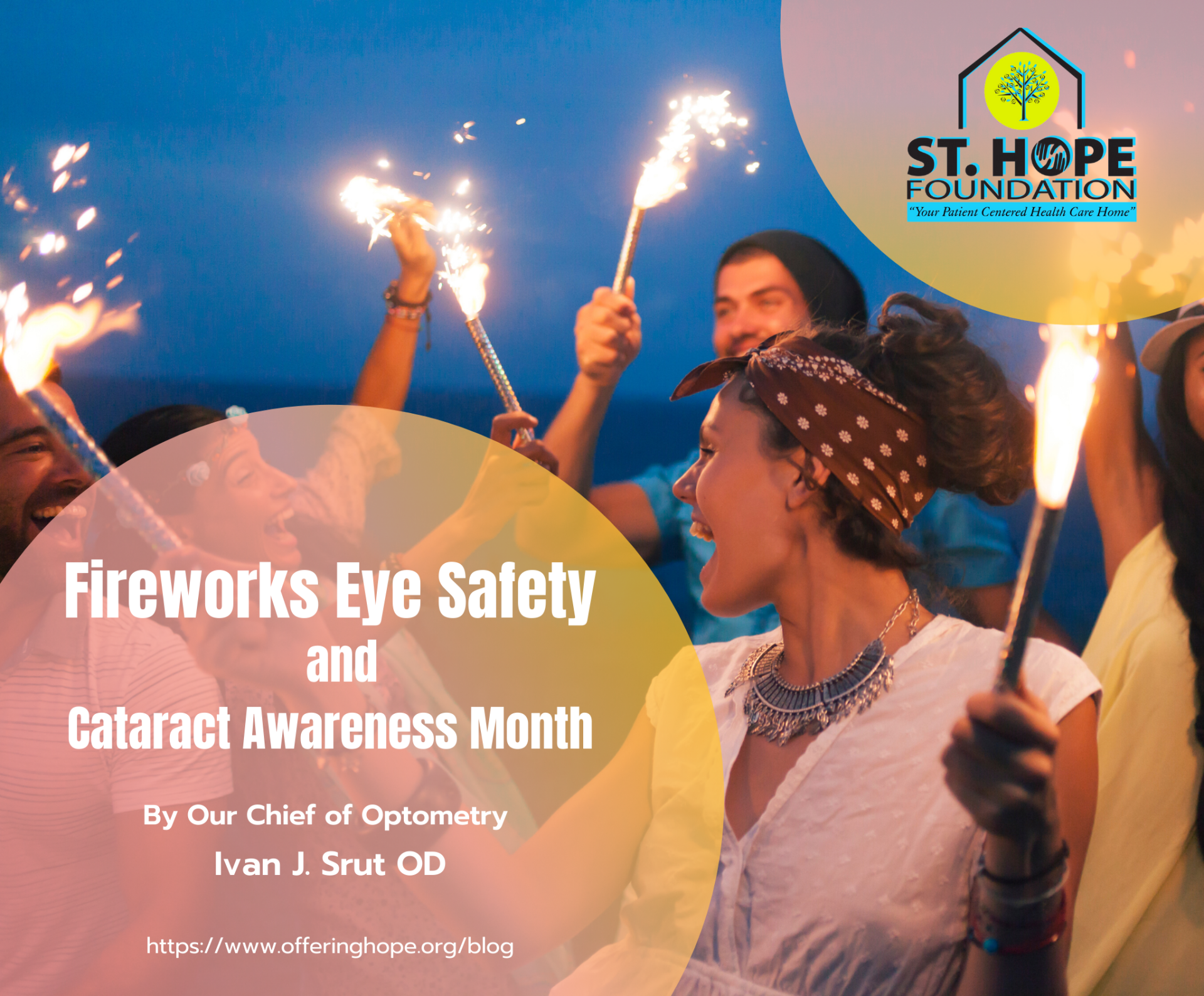
June is both Fireworks Eye Safety and Cataract Awareness Month! Fireworks are especially popular as we close in on the 4th of July, but they can be dangerous as well! Unfortunately eye injuries due to fireworks are common! Cataracts are a clouding of the natural lens of our eyes and also will diminish vision, but generally over a period of time.
Out of the total of injuries caused by fireworks, about 15% are eye injuries. These injuries tend to be chemical and thermal burns, corneal abrasions and retinal detachments, all of which can cause permanent loss of vision.
Fireworks are not toys and are best handled by professionals! Unfortunately too many “amateurs” out there want to give them a go! All sorts of injuries happen, including those to bystanders and children. Sparklers are especially dangerous to kids as they are often oblivious to the dangers involved with the sparkler as it can burn up to 2000 degrees Fahrenheit!
If you are going to be around fireworks this summer just remember to be alert and aware to minimize your chances of injury. Eye protection is recommended as well!
Although we all will get cataracts if we live long enough we can help ourselves put it off as long as possible by doing a few things such as wearing UV protective sunglasses, and wearing brimmed hats. Some studies have shown that foods rich in vitamin C may also delay cataract growth. Avoiding smoking is also helpful to reduce the risk for cataract development.
Age is not the only risk factor for cataracts. Other factors include diabetes, smoking, obesity, exposure to sunlight, steroid medication, high blood pressure, and eye injuries. If you notice your vision is clouded or blurred, see your eyecare professional for a thorough examination!
Cataracts are something that fortunately can be surgically removed, in most cases quite easily, and vision can be restored to a better level with intraocular lens implantation.
Enjoy your summer, be aware, and stay safe!
Until next time...